Write what is on your mind. Understand yourself over time.
Symplia gives your thoughts somewhere to go, helps you track what changes, and brings patterns into view over time. When you are in therapy, it also helps you prepare and keep the work going between sessions.
Web app available now. iOS and Android are launching soon.
TrackJournalReflectUnderstand
A private record of the things you notice, feel, and want to understand.
Why this is hard to see on your own
The thoughts that matter are often the easiest to lose.
A feeling can seem obvious in the moment and surprisingly hard to describe a few days later. A conversation can keep replaying in your head without ever becoming something you can look at clearly.
Writing creates a record outside your head. Tracking adds context. Looking back gives you something to compare, connect, and understand instead of relying on memory alone.
01Capture it while it is real.
Get the thought out before it disappears, changes shape, or gets crowded out by the next thing.
02Give it somewhere to live.
Your entries become a record you can revisit instead of a collection of moments you have to remember.
03Notice what keeps returning.
Over time, repeated feelings, situations, and themes become easier to see.
Journal
Say the thing. Even when you do not know exactly how.
Symplia is built for the thoughts you would rather capture than carry around. Write freely, use a prompt, speak instead of type, or write a letter you never intend to send.
Recent EntriesSee what you have been thinking about lately without digging through a database.
Unsent LettersWrite what you wish you could say, without sending it.
Thinking TrapsSlow down a thought and examine it before automatically accepting it as true.
Quick capturePut the moment somewhere safe.
Your record over time
Track
Turn scattered days into something you can look back on.
Track the things that give your days context, then revisit them together instead of treating every day like it happened in isolation.
Year in PixelsSee the shape of your year at a glance.
Mood & contextKeep a record of how you have been feeling alongside the things you choose to track.
More than a logYour history becomes useful when you can compare it, revisit it, and connect it to what you wrote.
Therapy collaboration
Share the parts of your journey you want your therapist to see.
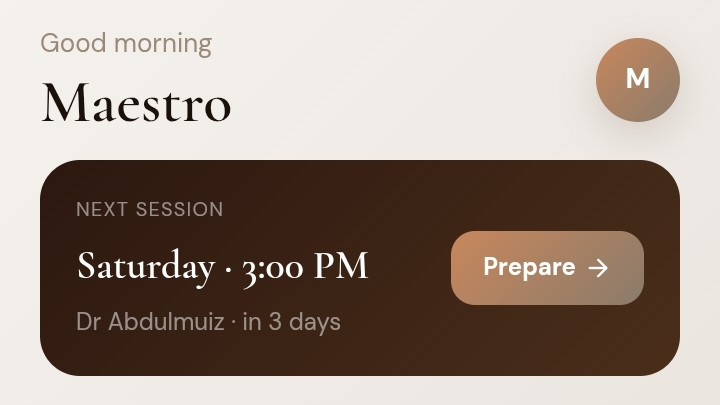
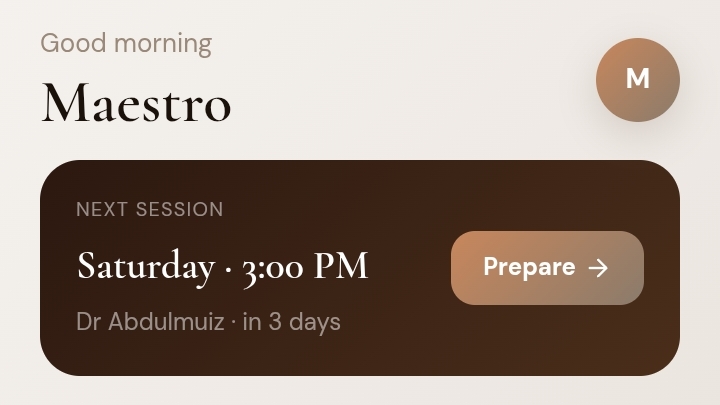
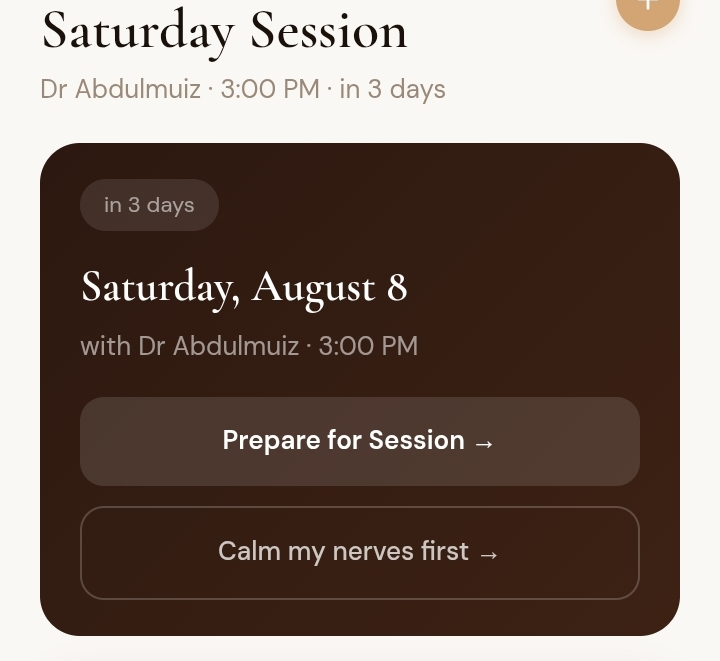
Therapy is one part of your mental-health journey, not the whole identity of Symplia. Use Session Prep to gather what you want to discuss, keep Therapy Work visible between appointments, and when you're ready, share only what you choose.
Session Prep & Therapy WorkCapture topics, feelings, and goals before a session, then track what your therapist asks you to work on between them.
Share Therapist ReportGenerate a PDF summary to share before a session.
Letter to TherapistOpen a draft in your email app when you want to send something personal.
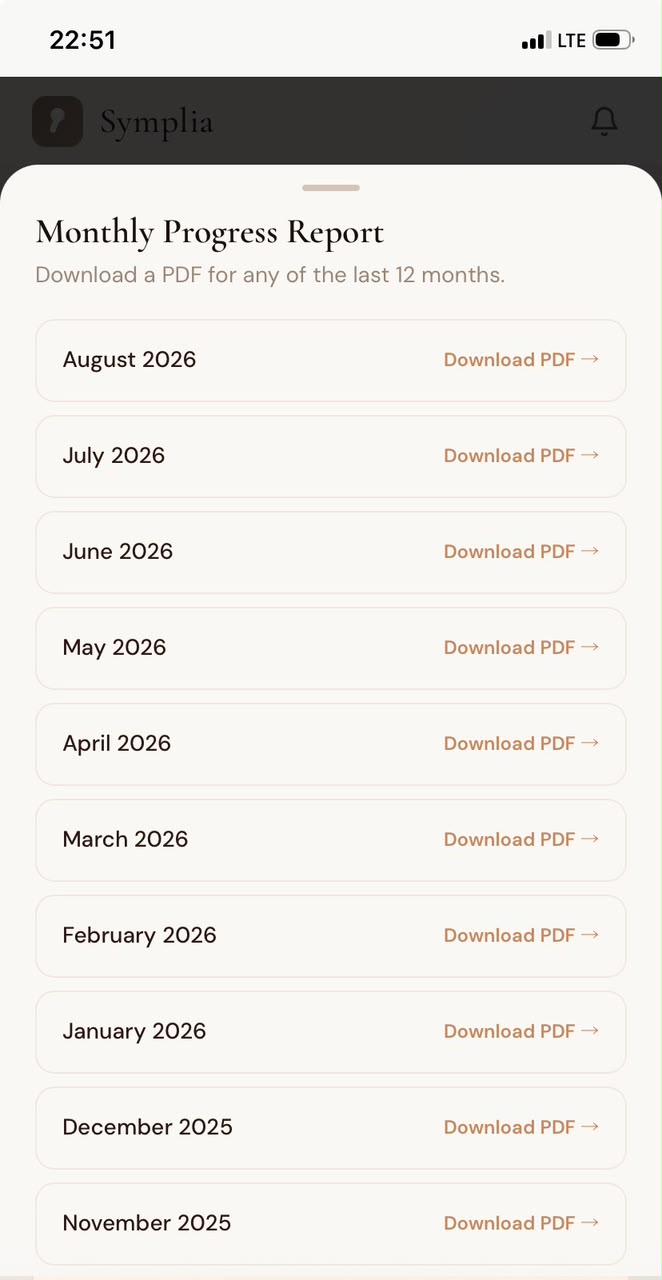
Monthly Progress ReportDownload a clear snapshot of the work you have been doing.
You decide what to share. Symplia does not replace therapist care or act as therapist practice-management software.
Symplia is a private mental health app that helps you track how you feel, journal what's happening, reflect on your experiences, notice patterns over time, and prepare for therapy.
Symplia supports your mental-health journey and can support the work you do in therapy. It does not provide therapy and does not replace a licensed mental-health professional.
Symplia is for people who want a structured place to journal, track what is changing, reflect on their experiences, and understand patterns over time. It is especially useful for people already in therapy.
Yes. Journaling, tracking, reflection, prompts, and insights can be useful whether or not you are currently seeing a therapist. Therapy preparation and therapy-work features are there when you need them.
You can free-write, use journaling prompts, write Unsent Letters, and use guided reflections such as Thinking Traps. The goal is to give you different ways to put an experience into words.
Voice Journal lets you capture a thought by speaking instead of typing. Your spoken entry can be kept as text, and you can also choose to keep the original audio recording.
Unsent Letters gives you a private place to write what you wish you could say without having to send it.
Thinking Traps are guided reflections that help you slow down a thought, examine it, and consider whether there is another way to understand the situation. They are not a diagnosis.
Symplia supports mood and other personal context you choose to record. Over time, tracking can give your journal more context and make patterns easier to revisit.
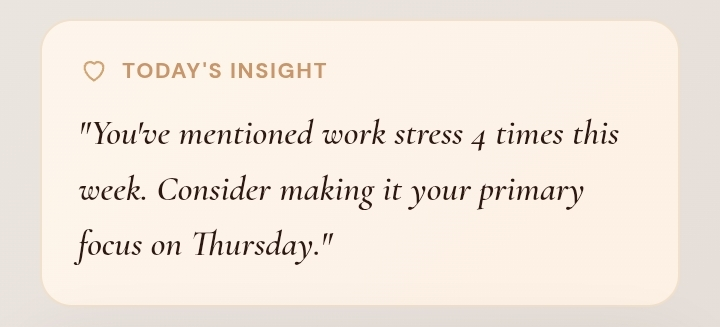
Insights helps you look across the information you choose to keep in Symplia, including journal history and tracked context. AI-assisted features can help organize recurring themes and patterns; they do not diagnose conditions or provide therapy.
Yes. You can record what your therapist asks you to work on, keep it visible, capture related experiences in your journal, and bring useful reflections back to your next session. Therapists do not currently push assignments through a provider dashboard.
Not automatically. Your journal is personal. When you choose to share a report or another piece of your work, you control what you send.
Yes. Symplia includes therapist collaboration tools such as a shareable therapist report, a Letter to Therapist flow, and monthly progress reports.
AI features are used for reflection and organization on appropriate journal content. They are not a therapist, diagnostic tool, emergency service, or replacement for professional care.
Monthly and annual plans include a 7-day free trial. The weekly plan has no trial and starts billing right away. Cancel anytime according to your plan terms.
Symplia is designed around intentional sharing. Your therapist does not automatically see your journal. For the exact handling of your data, see the Privacy Policy.
No. Symplia is not an emergency service. If you are in immediate danger or need urgent mental-health support, contact local emergency services or a qualified crisis service.
Symplia is built by Abdulmuiz Sulayman (online as Abdulmuizlab), a medical student building mental-wellness tools in public.
A better record of your inner life
Keep the parts of your life you want to understand.
Track what's happening, write about it when you need to, and come back when you want to see the bigger picture.