The best mood tracking app for therapy clients is the one you will actually open, that records context as well as a score, and that helps you bring what you noticed into your sessions. A single number a day rarely tells a therapist much. A number plus what happened, what you were doing and what you were thinking can. Daylio, Bearable and Symplia take different approaches, and the right one depends on your goals.
Below is what makes mood tracking useful in therapy, how the main options differ, and a simple routine you can start this week.
Why mood tracking helps in therapy
Between sessions you live your life, and by the time you sit down with your therapist, most of the week has blurred. Memory is also biased toward whatever happened most recently or most intensely. Tracking gives you a more even record, which can help you:
- Notice patterns, such as lower moods after poor sleep or certain meetings.
- Describe your week with specifics instead of "it was fine, I think".
- Spot whether something your therapist suggested is changing anything.
- Remember the moments you wanted to raise.
Tracking is a tool for noticing, not a test you can fail. A bad number is information, not a verdict.
What to look for in an app
For therapy specifically, these features matter more than a long feature list:
- Context with each entry. A short note, tag or activity next to the score so you can later see why.
- Low friction. If a check-in takes more than a minute, you will skip it on hard days, which are the days that matter.
- Privacy. Look for a lock, clear backup behaviour and a readable privacy policy.
- A way to use the data. Charts are nice. A summary or note you can read out loud in a session is better.
- Easy sharing. You should be able to show your therapist what you choose, not everything.
How the main options compare
Daylio: fast and simple
Daylio's site describes a daily entry in two taps, where you pick a mood and activities, with optional notes, photos and voice memos. It includes charts, a Year in Pixels view, reminders, PDF and CSV export, and PIN or biometric lock. It is free to download, and Premium details are on their site.
Suits best: people who want the lowest-effort habit possible. Worth knowing: it is a general mood and habit tracker, and its site does not describe features built around therapy sessions. If you want to compare it in depth, see Daylio alternatives for therapy clients or our Symplia vs Daylio page.
Bearable: detailed and data-rich
Bearable lets you track mood, emotions, sleep, symptoms and energy, plus medication and other health measures, and offers correlation reports and exports for doctor visits. It has free and paid tiers, so check their site for current pricing. It is on iOS and Android.
Suits best: people with chronic conditions, ADHD or sleep issues who want to see how several factors move together. Worth knowing: the detail is powerful but can feel like a lot on low-energy days.
Symplia: tracking tied to therapy
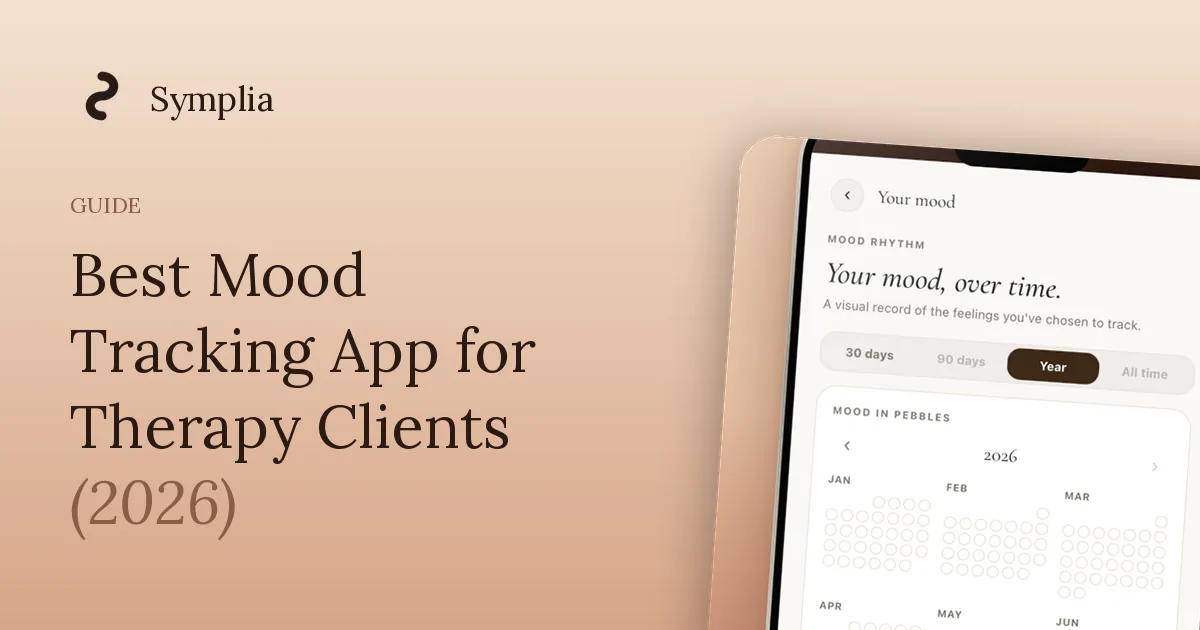
Symplia is a private mental health app where mood check-ins include context, then connect to your journal, Session Prep and a shareable therapist report you control. Year in Pixels shows your months at a glance, and AI-assisted insights help you notice recurring themes (not a diagnosis). It is a web app now, with iOS and Android coming soon.
Suits best: people in regular therapy who want tracking to feed sessions. Worth knowing: it is more than a mood diary, so it takes slightly longer than a two-tap check-in.
Finch: a gentler, game-like habit
Finch describes itself as a self-care pet app, where you care for a pet by taking care of yourself. Some people find that more motivating than charts. Check the site for what the free and Plus versions include.
Suits best: people who struggle with motivation and respond well to a light, playful approach. Worth knowing: it is built around self-care routines, not therapy preparation.
A simple mood tracking routine for therapy
You do not need a complicated system. Try this for two weeks:
- Check in once or twice a day. Same times each day, such as lunchtime and bedtime.
- Score your mood, then add one line. "4/10, argument with flatmate" is enough.
- Tag one cause or context. Sleep, work, family, body, or "no idea".
- Mark anything you want to raise. A star or note is fine.
- Review the week the day before therapy. Look for the highest, lowest and most repeated entries.
Our guide to how to track mood between therapy sessions expands on this, and how to track your mental health and understand patterns covers what to look for in the data. The mental health tracker page also explains what is worth recording.
Common mistakes
- Tracking too many things. Start with mood plus one factor.
- Treating the number as a grade. Low scores are data, not failure.
- Skipping hard days. A one-word entry on a bad day is more valuable than a perfect streak.
- Never reviewing. The value is in looking back.
When to get support
If your mood is persistently low, you feel hopeless, or you are thinking about harming yourself, please contact a licensed mental health professional, your local emergency services or a crisis line in your country. An app cannot assess risk or respond in an emergency.
Where Symplia fits
Symplia is not therapy and does not diagnose. It gives you a private place to track mood with context, journal, and prepare what you want to say, so your sessions can start with real material. Every plan includes every feature, and you can compare them on the pricing page.
Try Symplia free at app.symplia.app. Monthly and Annual plans include a 7-day free trial.
Frequently asked questions
What is the best mood tracking app for therapy?
It is the one you will use consistently and that records context. Daylio is quick, Bearable is detailed, and Symplia is built around therapy sessions.
How often should I track my mood for therapy?
Once or twice a day is enough for most people. Consistency matters more than frequency.
Should I show my therapist my mood data?
Many therapists welcome it, but ask what format helps them. A short summary of highs, lows and patterns is often more useful than raw charts.
Can mood tracking make anxiety worse?
For some people, constant checking can increase focus on symptoms. If that happens, reduce how often you track or tell your therapist.
Is a paper mood diary just as good?
Yes, if you use it. Apps add charts, reminders and sharing, but a notebook with a score and a line works well.
Do I need to track mood if I am not in therapy?
No, but it can still help you notice patterns. If you notice anything worrying, consider speaking with a licensed professional.