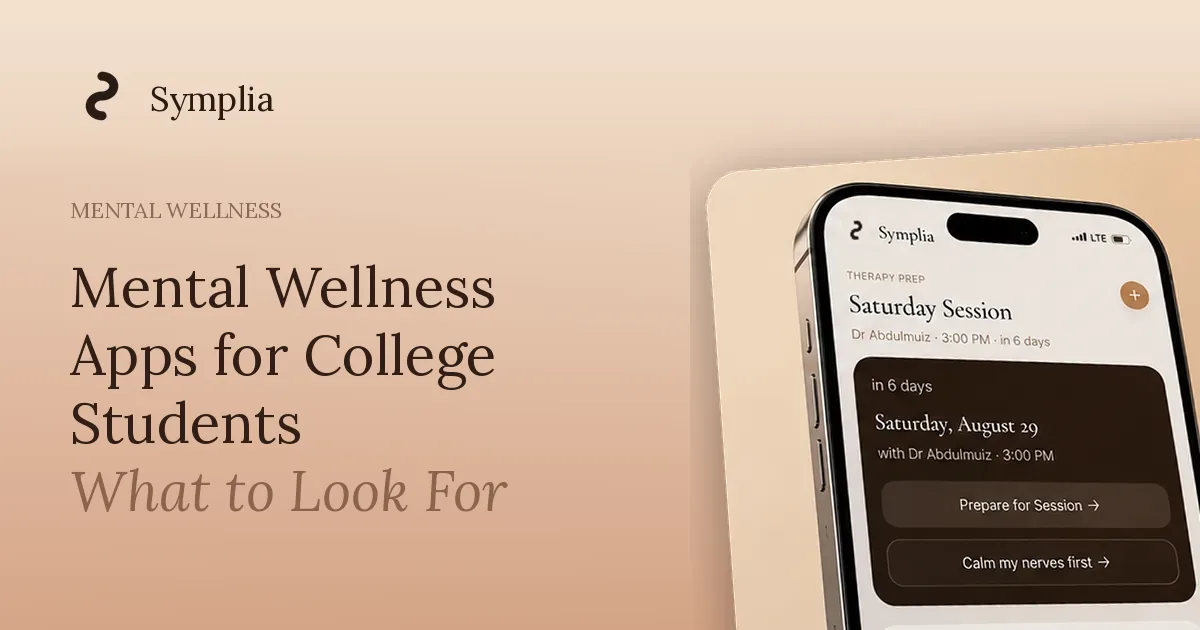
The best mental wellness app for a college student is one that is private on shared devices, affordable on a student budget, quick to use between classes and honest about what it cannot do. Student distress is common: the 2024-2025 Healthy Minds Study reports that 37% of students had moderate to severe depressive symptoms and 32% had moderate to severe anxiety. An app can support daily habits, but it works best alongside campus counselling, not instead of it.
How common is student distress?
If you are a stressed student, you are in large company. The Healthy Minds Study 2024-2025 data report summarises that 37% of students reported moderate to severe depressive symptoms (18% of those severe), 32% reported moderate to severe anxiety, 11% reported suicidal ideation and about 1 in 4 felt isolated from others.
There is some encouraging news as well. The University of Michigan School of Public Health summarised the 2023-24 Healthy Minds data (about 104,000 students at 200 universities) as showing improving symptoms and more students getting support: among students with depressive or anxiety symptoms, 61% used therapy or counselling. It also reported that 41% of students believed others would think less of someone who received treatment, even though only 7% said they themselves would.
Those numbers are from US surveys, so your own campus may differ. The takeaway is simple: needing support is common, and using it is common too.
What an app can and cannot do for a student
Apps can help with the small, daily things: noticing your mood, writing down what is stressing you, practising breathing before an exam, and keeping a record to show a counsellor. The US National Institute of Mental Health says apps can complement traditional therapy by extending sessions and monitoring between visits, but that most apps lack peer-reviewed research. So think of an app as a support, not a treatment.
What to look for: a student's checklist
1. Cost that fits a student budget
Subscriptions add up fast alongside rent and textbooks. Look for a free tier or a trial, clear billing, and an easy way to cancel. Read free vs paid mental wellness apps to see what each level usually includes. Pricing changes often, so confirm on the company's site, and set a reminder before any trial ends.
2. Privacy on shared devices
Dorm life means shared laptops, roommates who borrow your phone and campus Wi-Fi. Check for:
- A passcode or biometric lock inside the app
- No sensitive text in lock-screen notifications
- Easy sign-out on shared or library computers
- The ability to delete your data and account
Privacy matters more than most people think. In 2023 the Mozilla Foundation gave a privacy warning label to 19 of 32 mental health apps it reviewed. Our privacy checklist lists what to check.
3. Fast enough for a busy day
A 60-second mood check-in will survive exam season. A 20-minute daily programme will not. Choose something you can use between lectures.
4. Journaling and tracking that show patterns
Seeing that your low days follow late nights or deadline weeks is useful information. A mental health tracker with room for context makes it easier to spot patterns.
5. Crisis information
The app should tell you what to do in an emergency and should be clear that it is not a crisis service.
6. Works with, not against, campus support
An app that helps you prepare for a counselling appointment, such as writing down what you want to talk about, is more useful than one that keeps you away from it.
Use campus counselling as the main support
Many campuses offer counselling services, often free or low-cost for enrolled students, along with peer groups and disability or accommodations offices. Availability and waiting times differ by campus, so check your student services page. An app can fill the gap between appointments: log your mood, write notes and bring them to your session.
Studying health or nursing? The pressure is a little different, and we cover it in mental health apps for medical and nursing students.
A simple routine that fits student life
- Morning (1 minute): one mood check-in.
- After a hard class or exam (2 minutes): write what happened and what you felt.
- Evening (5 minutes): one prompt from journal prompts, or a breathing exercise.
- Weekly (10 minutes): look back and notice what helped.
For a fuller plan, see how to build a mental wellness routine. To see how you have been feeling lately, try the free mental wellness check. It is a reflection tool, not a diagnosis.
When to get support
Please contact your campus counselling service, a licensed professional, local emergency services or a crisis line in your country if you feel unsafe, have thoughts of harming yourself, or cannot cope. The NIMH contact page directs people in the US to emergency services for life-threatening situations and to the 988 Suicide & Crisis Lifeline for emotional distress. Outside the US, look up your national service.
Sources and further reading
- The Healthy Minds Study: 2024-2025 Data Report - prevalence of depression, anxiety, suicidal ideation and isolation among students.
- College students' mental health improving, more finding support (University of Michigan School of Public Health, 2024) - 2023-24 trends in symptoms, treatment use and stigma.
- Technology and the Future of Mental Health Treatment (NIMH) - apps as a complement to therapy and the lack of peer-reviewed evidence.
- Shady Mental Health Apps Inch Toward Privacy and Security Improvements, But Many Still Siphon Personal Data (Mozilla Foundation, 2023) - privacy findings on 32 mental health apps.
- Contact Us (NIMH) - emergency and crisis line guidance.
Where Symplia fits
Symplia is a private mental health app for journaling, mood check-ins with context and reflection, with Session Prep to help you organise what you want to say in a counselling appointment. Pricing is Weekly $4.99, Monthly $12.99 or Annual $79 in USD, with every feature on every plan, so check the pricing page against your budget. It is not therapy, not diagnostic and not an emergency service.
Try Symplia free at app.symplia.app. Monthly and Annual plans include a 7-day free trial.
Frequently asked questions
What is the best mental wellness app for college students?
The best one is private, affordable, quick to use and clear about its limits. Test a few for a week and keep the one you actually open.
Are mental wellness apps enough for student stress?
For everyday stress they can help you build habits and notice patterns. If symptoms are severe, getting worse or affecting your studies, use campus counselling or a licensed professional.
How can I keep my mental health app private in a dorm?
Use a passcode, hide notification previews, sign out on shared computers and check that you can delete your data. Avoid saving sensitive entries on devices others can open.
Is campus counselling free?
It varies by campus. Many offer free or low-cost sessions to enrolled students, but waiting times differ, so check your student services page.
Are free apps good enough on a student budget?
Some are, particularly for trying journaling or tracking. Check how a free app makes money, since ads and data sharing are common.
Should I tell my counsellor I use an app?
It can help. Showing your mood notes or journal themes can make sessions more focused, and you choose what to share.